
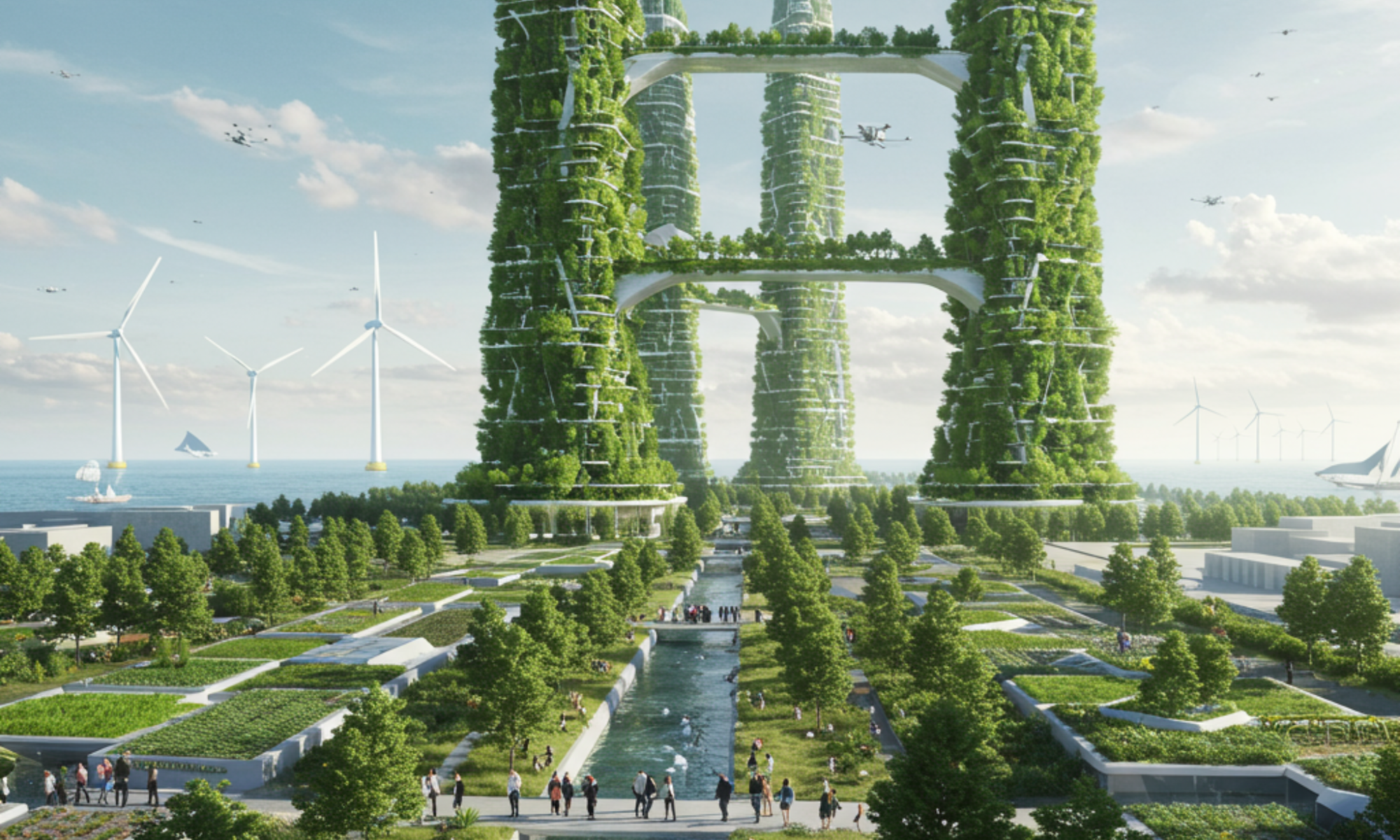
Climate Innovation: Emerging Signals Shaping the World in 3030 and Beyond

Featured image for Climate Innovation: Emerging Signals Shaping the World in 3030 and Beyond

As we look toward the year 3030 and beyond, climate innovation continues to be a critical field driving humanity’s response to environmental challenges. Recent advancements and emerging signals suggest transformative changes on the horizon that could redefine our relationship with the planet.

1. **Advanced Carbon Capture Technologies**: Researchers are developing next-generation direct air capture systems that promise to remove CO2 at unprecedented scales and lower costs. For example, companies like Climeworks have scaled up their facilities, and ongoing research from institutions such as the Massachusetts Institute of Technology (MIT) focuses on enhancing capture efficiency using novel materials (MIT Energy Initiative, 2024).

2. **Synthetic Photosynthesis**: Innovations in artificial photosynthesis aim to mimic natural processes to convert sunlight, water, and CO2 into usable fuels and chemicals. This technology could revolutionize energy production and carbon recycling, with projects from the Joint Center for Artificial Photosynthesis (JCAP) making significant strides (DOE, 2024).

3. **Climate-Resilient Urban Ecosystems**: Urban centers are integrating green infrastructure and smart technologies to create resilient ecosystems capable of withstanding extreme weather events. Cities like Singapore and Copenhagen are pioneering these approaches, blending nature-based solutions with digital monitoring (World Bank Climate Report, 2024).

4. **Geoengineering Governance Frameworks**: As geoengineering technologies mature, international regulatory frameworks are being developed to ensure responsible research and deployment. The United Nations Environment Programme (UNEP) recently published guidelines emphasizing transparency and ethical considerations (UNEP, 2024).

5. **AI-Driven Climate Modeling**: Artificial intelligence is enhancing climate prediction accuracy and enabling real-time adaptive management strategies. Platforms like IBM’s Green Horizons project demonstrate the potential of AI to inform policy and mitigate risks (IBM Research, 2024).

These signals underscore a future where technology and sustainability coalesce, offering hope for a balanced and resilient planet centuries from now. Staying informed and supporting these innovations will be crucial as we navigate the complex climate landscape ahead.


What It Takes to Be a Good Innovator

Featured image for What It Takes to Be a Good Innovator

Being a good innovator requires a blend of creativity, curiosity, and resilience. It starts with an open mind, willing to explore new ideas and challenge the status quo. A good innovator constantly seeks knowledge and stays informed about emerging trends and technologies. Critical thinking and problem-solving skills help turn ideas into practical solutions.

Equally important is the ability to embrace failure as a learning opportunity and persist through setbacks. Collaboration and effective communication enable innovators to gather diverse perspectives and refine their concepts. Ultimately, being a good innovator means combining passion with discipline to create meaningful change.

Driving Startup Innovation in Germany: A Thriving Ecosystem

Featured image for Driving Startup Innovation in Germany: A Thriving Ecosystem

Germany has emerged as a powerhouse for startup innovation, blending a rich industrial heritage with cutting-edge technology and a supportive ecosystem. Cities like Berlin, Munich, and Hamburg are hotspots for startups focusing on fintech, artificial intelligence, clean energy, and mobility solutions.

The country’s robust infrastructure, access to venture capital, and government initiatives such as the High-Tech Gründerfonds and EXIST program foster a nurturing environment for entrepreneurs. Additionally, strong collaboration between universities, research institutions, and industry accelerates the development and commercialization of innovative ideas.

As Germany continues to invest in digital transformation and sustainability, its startup scene is poised for significant growth and global impact.

Driving Startup Innovation in the UK: A Thriving Ecosystem

Featured image for Driving Startup Innovation in the UK: A Thriving Ecosystem

The UK has established itself as a global hub for startup innovation, thanks to its dynamic ecosystem that fosters creativity, investment, and technological advancement.

From London’s Silicon Roundabout to emerging tech clusters in Manchester and Edinburgh, startups are leveraging cutting-edge technology and diverse talent pools to disrupt traditional industries. Government initiatives, access to venture capital, and a collaborative community are key drivers behind this growth.

As the UK continues to support innovation through policy and infrastructure, its startups are poised to make significant global impacts across sectors such as fintech, healthtech, and green energy.

Innovation Highlights of 2026: A Year of Breakthroughs

Featured image for Innovation Highlights of 2026: A Year of Breakthroughs

The year 2026 has been remarkable for innovation across multiple sectors. Advancements in artificial intelligence have led to more intuitive and autonomous systems, transforming industries from healthcare to transportation.

Renewable energy technologies have seen significant improvements, with new materials and storage solutions making clean energy more accessible and efficient. In biotechnology, gene editing and personalized medicine have progressed, offering new hope for treating complex diseases.

Additionally, space exploration has reached new milestones with successful missions to the Moon and Mars, paving the way for future colonization efforts. Overall, 2026 stands out as a pivotal year where technology and creativity converged to shape a promising future.