
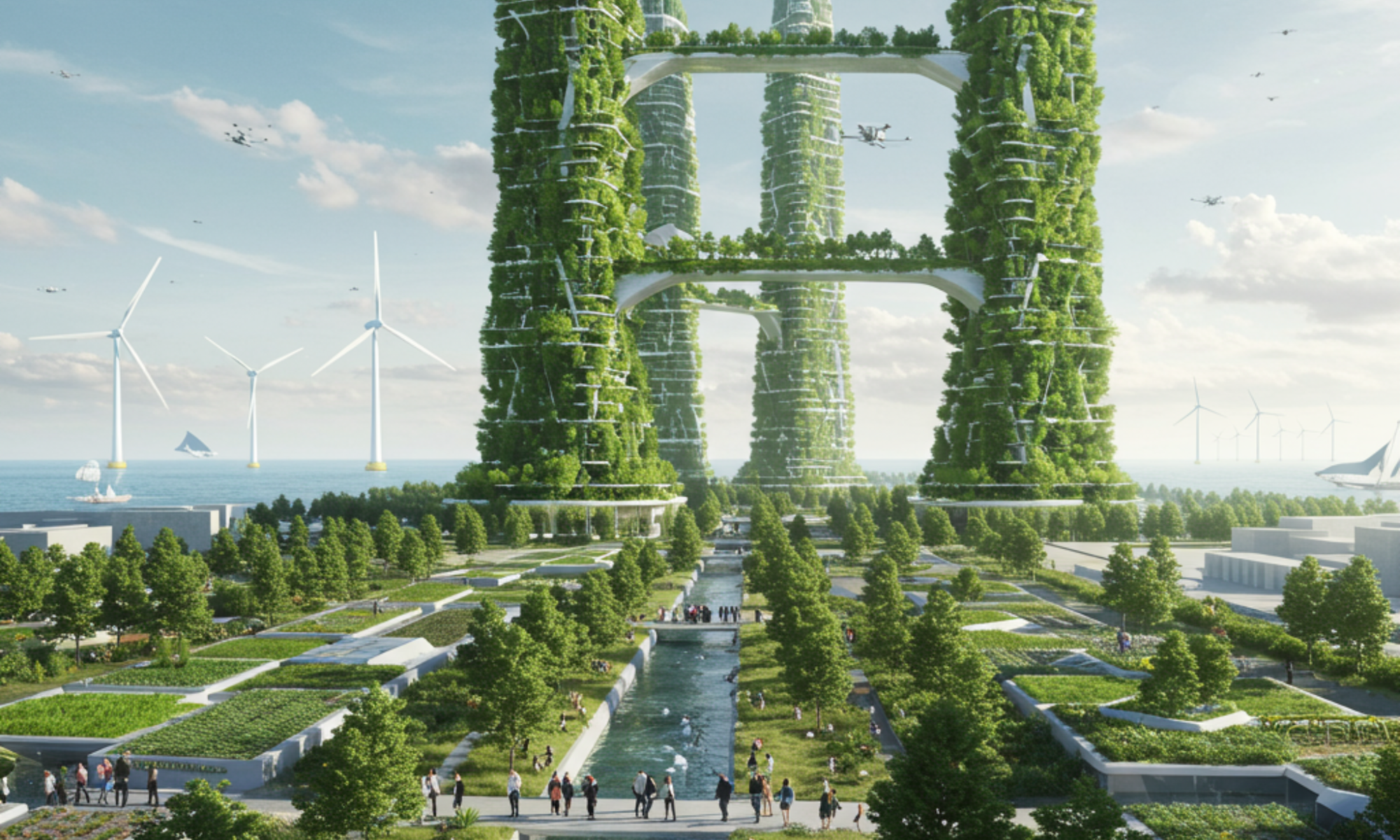
As we look toward the year 3030 and beyond, climate innovation continues to be a critical field driving humanity’s response to environmental challenges. Recent advancements and emerging signals suggest transformative changes on the horizon that could redefine our relationship with the planet.
1. **Advanced Carbon Capture Technologies**: Researchers are developing next-generation direct air capture systems that promise to remove CO2 at unprecedented scales and lower costs. For example, companies like Climeworks have scaled up their facilities, and ongoing research from institutions such as the Massachusetts Institute of Technology (MIT) focuses on enhancing capture efficiency using novel materials (MIT Energy Initiative, 2024).
2. **Synthetic Photosynthesis**: Innovations in artificial photosynthesis aim to mimic natural processes to convert sunlight, water, and CO2 into usable fuels and chemicals. This technology could revolutionize energy production and carbon recycling, with projects from the Joint Center for Artificial Photosynthesis (JCAP) making significant strides (DOE, 2024).
3. **Climate-Resilient Urban Ecosystems**: Urban centers are integrating green infrastructure and smart technologies to create resilient ecosystems capable of withstanding extreme weather events. Cities like Singapore and Copenhagen are pioneering these approaches, blending nature-based solutions with digital monitoring (World Bank Climate Report, 2024).
4. **Geoengineering Governance Frameworks**: As geoengineering technologies mature, international regulatory frameworks are being developed to ensure responsible research and deployment. The United Nations Environment Programme (UNEP) recently published guidelines emphasizing transparency and ethical considerations (UNEP, 2024).
5. **AI-Driven Climate Modeling**: Artificial intelligence is enhancing climate prediction accuracy and enabling real-time adaptive management strategies. Platforms like IBM’s Green Horizons project demonstrate the potential of AI to inform policy and mitigate risks (IBM Research, 2024).
These signals underscore a future where technology and sustainability coalesce, offering hope for a balanced and resilient planet centuries from now. Staying informed and supporting these innovations will be crucial as we navigate the complex climate landscape ahead.